
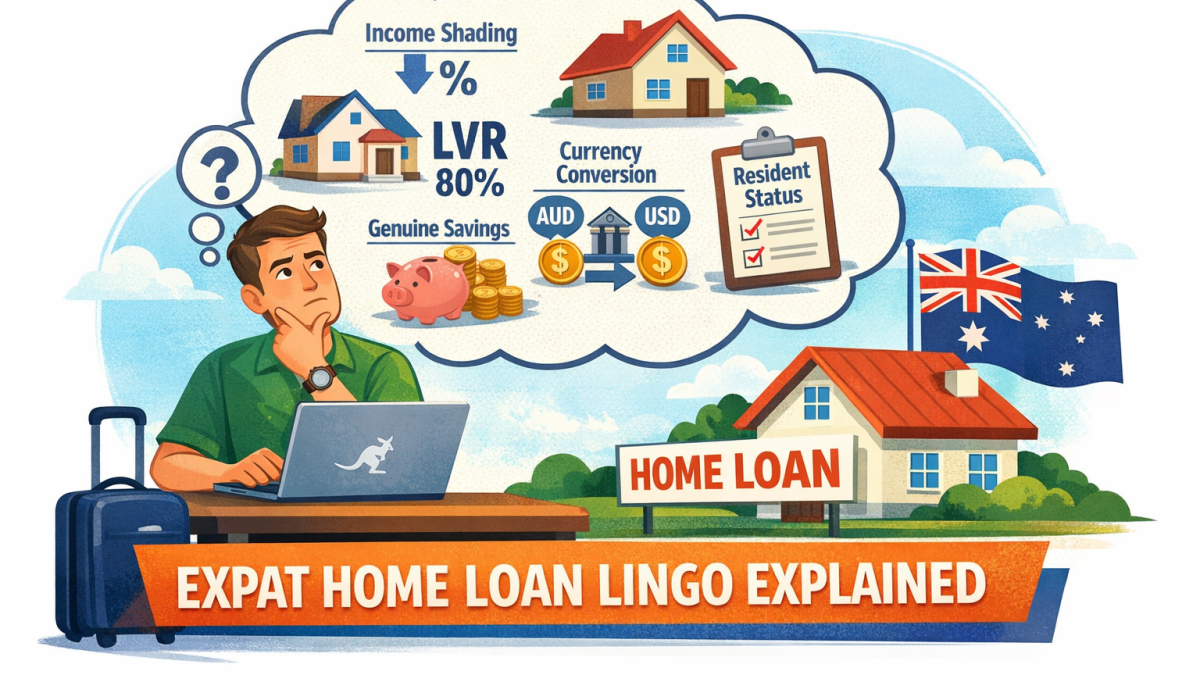
Australian Expat Home Loan Lingo Explained: What the Banks Really Mean
When Aussie expats apply for a home loan, one of the biggest frustrations isn’t interest rates or paperwork — it’s the jargon.
Brokers, Banks and lenders use a lot of technical language when assessing expat home loans, and misunderstanding just one term can lead to unrealistic expectations, reduced borrowing power, or even a declined application.
This guide breaks down the most common expat home loan lingo, explains what each term really means, and — most importantly — why it matters if you’re earning overseas and buying property in Australia.
Income Shading
What it means:
Income shading is when a bank uses only a percentage of your overseas income (typically 70–90%) when calculating how much you can borrow.
Why it matters for expats:
Even if you earn a strong salary overseas, banks apply shading to protect against currency fluctuations and overseas employment risk. This can significantly reduce borrowing power — sometimes by hundreds of thousands of dollars — depending on the lender.
Loading
What it means:
A loading is an extra buffer banks apply to expenses, interest rates, or repayments when assessing serviceability.
Why it matters for expats:
Expat applications are often assessed more conservatively. Even with solid income, loadings can make your loan look less affordable on paper, reducing how much a bank is willing to lend.
LVR (Loan-to-Value Ratio)
What it means:
LVR is the loan amount divided by the property value, expressed as a percentage.
Why it matters for expats:
Many banks cap expat loans at lower LVRs (commonly 70–80%). A larger deposit often unlocks more lenders, better policy options, and sometimes sharper pricing.
Resident Status
What it means:
Your resident status refers to how banks classify you for lending and tax purposes.
Why it matters for expats:
Even if you’re an Australian citizen, living overseas means banks assess you under expat lending rules, not standard home loan policies. Your country of residence and visa status can directly affect which banks will lend to you.
Expat Borrower
What it means:
An expat borrower is typically an Australian citizen or permanent resident who lives and earns overseas.
Why it matters for expats:
Expat borrowers are assessed under specialised policies, with different rules around income, deposits, and acceptable countries and currencies.
Accepted Currency
What it means:
The foreign currency your income is paid in that a bank is willing to assess.
Why it matters for expats:
Some banks only accept “strong” or stable currencies such as USD, GBP, AED, or SGD. Currency choice affects both income shading and which lenders are available to you.
Currency Conversion
What it means:
The process of converting your overseas income into Australian dollars for assessment.
Why it matters for expats:
Exchange rates, buffers, and timing all affect how much income a bank actually uses — which can materially change borrowing capacity.
Serviceability
What it means:
Serviceability is the bank’s calculation of whether you can comfortably afford loan repayments.
Why it matters for expats:
Expat serviceability is usually stricter due to income shading, loadings, and conservative assumptions. Two banks can assess the same income very differently.
PAYG Income
What it means:
Salary or wages paid by an employer.
Why it matters for expats:
PAYG expats generally find it easier to obtain approval, as this income is simpler for banks to verify and assess.
Contract Income
What it means:
Income earned under a fixed-term employment contract.
Why it matters for expats:
Banks often require a minimum time remaining on the contract and evidence of renewals. Not all lenders assess contract expat income the same way.
Self-Employed Income
What it means:
Income earned from running your own business or working as a contractor.
Why it matters for expats:
Self-employed expats face tighter rules, more documentation, and fewer lender options — making lender selection critical.
Bonus Income
What it means:
Variable income paid on top of base salary.
Why it matters for expats:
Most banks require a two-year history and only assess a reduced percentage. Some lenders exclude this income entirely for expats.
Policy
What it means:
A lender’s internal rules for assessing home loans.
Why it matters for expats:
For expat home loans, policy matters more than interest rates. The “best bank” depends on your income type, country of residence, and currency — not advertising.
Tier 1 Banks
What it means:
Major Australian banks with conservative lending rules.
Why it matters for expats:
They often offer competitive rates but stricter expat policies, higher income shading, and lower maximum LVRs.
Second-Tier & Specialist Lenders
What it means:
Non-major or niche lenders with specialised policies.
Why it matters for expats:
These lenders are often more flexible for expats and can result in higher borrowing power when major banks say no.
Pre-Approval
What it means:
An indicative approval showing how much you may be able to borrow.
Why it matters for expats:
Expat pre-approvals must be structured carefully. A poorly chosen lender can lead to later declines or reduced loan amounts.
Credit File (Australia)
What it means:
Your Australian credit history.
Why it matters for expats:
Applying to the wrong bank can lead to unnecessary credit enquiries. Using a broker helps protect your credit file by targeting the right lender first.
Final Thoughts: Understanding the Lingo Gives You an Edge
Many Aussie expats don’t struggle to get a home loan because they earn too little — they struggle because they don’t understand how banks interpret overseas income.
Knowing this lingo helps you:
- Set realistic expectations
- Avoid declined applications
- Choose the right lender
- Maximise borrowing power
And most importantly, it helps you avoid costly mistakes when buying property from overseas.
For more information please access our ‘Home loan Guide for Aussie Expats” and feel free to contact us